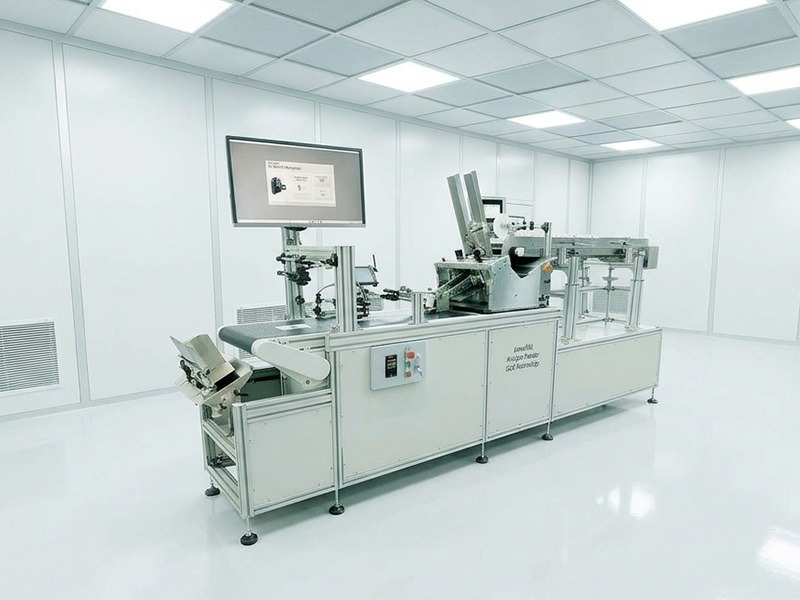
Modular packaging lines: scalability and flexibility for growing companies
Modular feeding lines for packaging: scalability and compactness
In today’s manufacturing landscape, fluctuating demand and the constant evolution of product formats call for a fundamental rethink of automation strategies. Monolithic systems, custom-designed for a single type of process, are now showing clear limitations. The true engineering solution for maintaining competitiveness lies in the adoption of modular packaging lines.
Have a look of our Modular Lines , click here !
The limitations of rigid automation
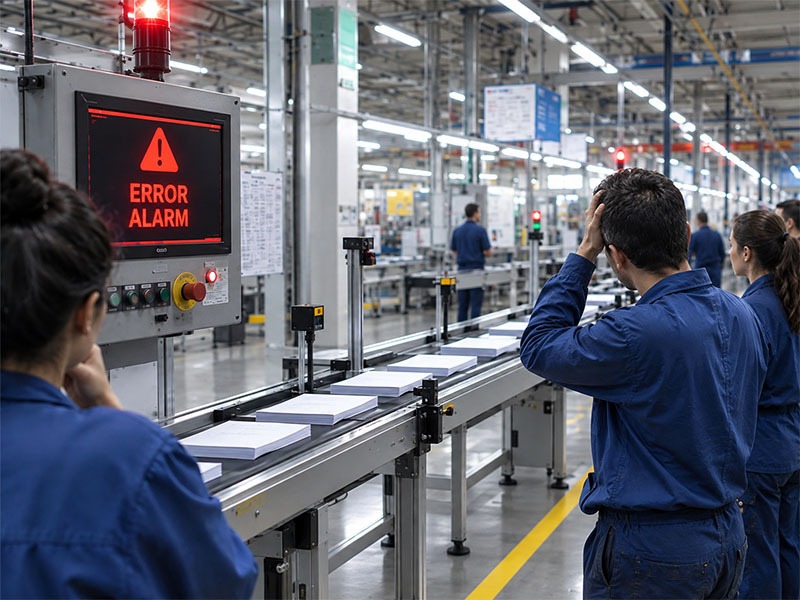
A traditional packaging line, however efficient it may be, can often be brought to a standstill by jams – even minor ones – in the feeders or in the product insertion or inspection lines. When the market changes, production volumes and products’ type change with it, having lines that are difficult to improve is a problem. For example, adding a system for inserting promotional flyers or a labelling module can require exorbitant investment. This scenario forces companies to choose between two equally disadvantageous options: outsourcing part of the packaging process or facing the enormous expense of completely replacing the plant.
The engineering benefits of modularity
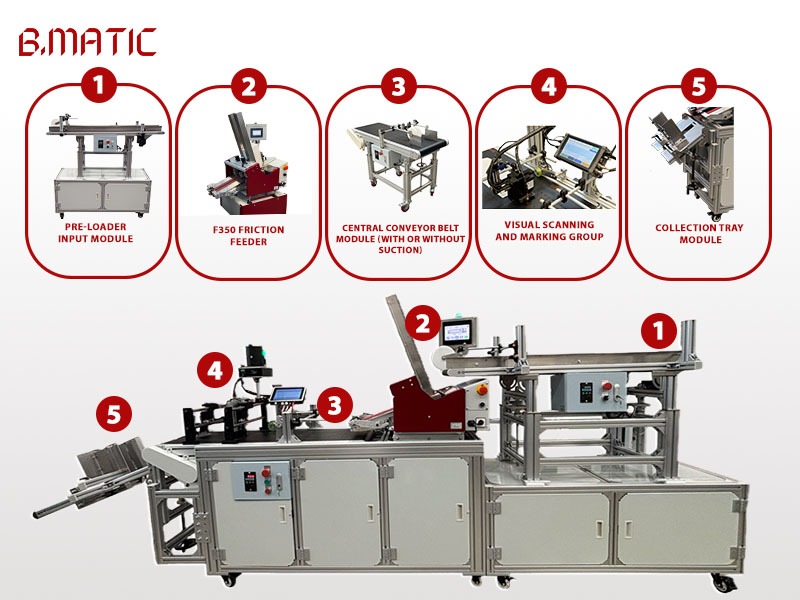
Designing B.MATIC’s flexible automation using independent modules turns this paradigm on its head, offering immediate technical and operational benefits.
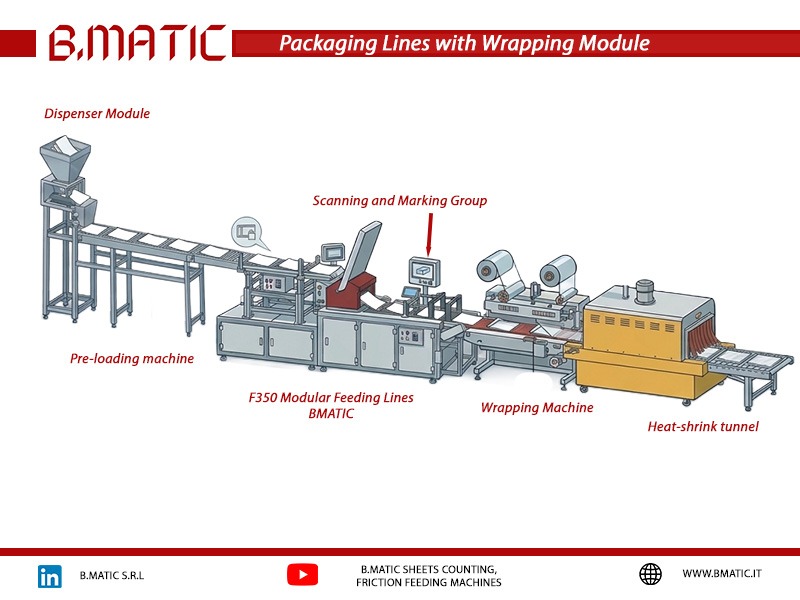
Plug-and-play integration In a modular production line, each component performs a specific function and allows production capacity to be scaled over time and as required. It is possible to add a new feeding module, a marking station or an optical vision system for quality control simply by interfacing with the existing B.MATIC line. Electronic and mechanical integration takes place very quickly thanks to the support of B.MATIC’s technicians; any software modification affects the entire line.
Progressive scalability of the investment. Modularity transforms the capital employed into a progressive investment. The company can set up a basic line to meet current volumes, and then expand it physically only when increased production or greater packaging complexity actually require it.
Ensuring long-term competitiveness
Implementing modular systems for feeding and packaging, based on the principles of modularity, saves both time and money. Modular packaging lines safeguard industrial investments, allowing individual operational units to be dismantled, upgraded or reconfigured in line with future challenges. This is a structural approach that guarantees total operational continuity and unrivalled flexibility in the long term.