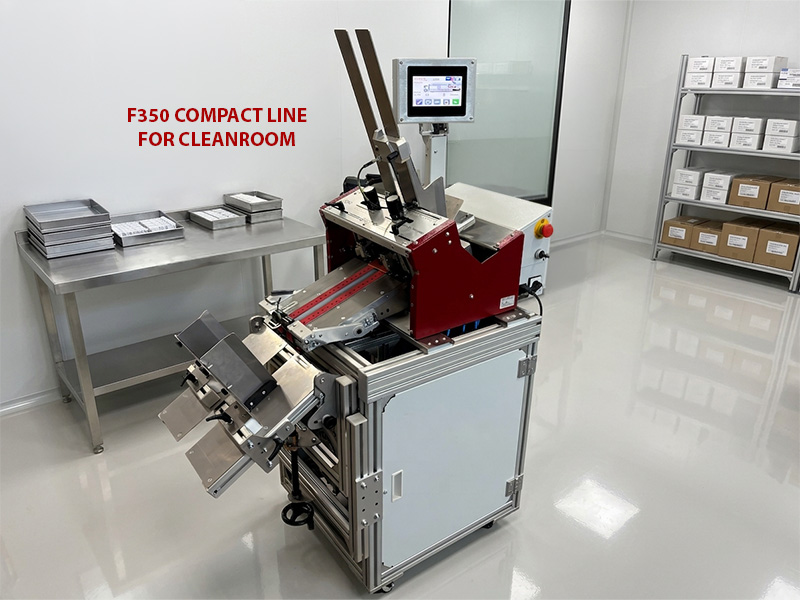
Friction feeders: preventing double feeds and jams
In the paper converting and packaging automation industry, the efficiency of an entire production line depends on the fluidity of its individual components. One of the most common and frustrating technical problems when integrating friction feeders is “double feeding”. This snag triggers a chain reaction that leads to severe jams, material waste, and costly machine downtime, heavily impacting delivery times.
From Double Feeding to Mechanical Jamming
When the feeder pulls two or more sheets simultaneously, an anomalous and out-of-tolerance thickness enters the subsequent transport or folding units. This unexpected event almost mathematically generates a mechanical jam downstream. The machine is forced to stop to preserve its internal components, compelling the operator to halt the entire system to manually free belts and rollers from the jammed materials.
Why do feeders feed incorrectly?
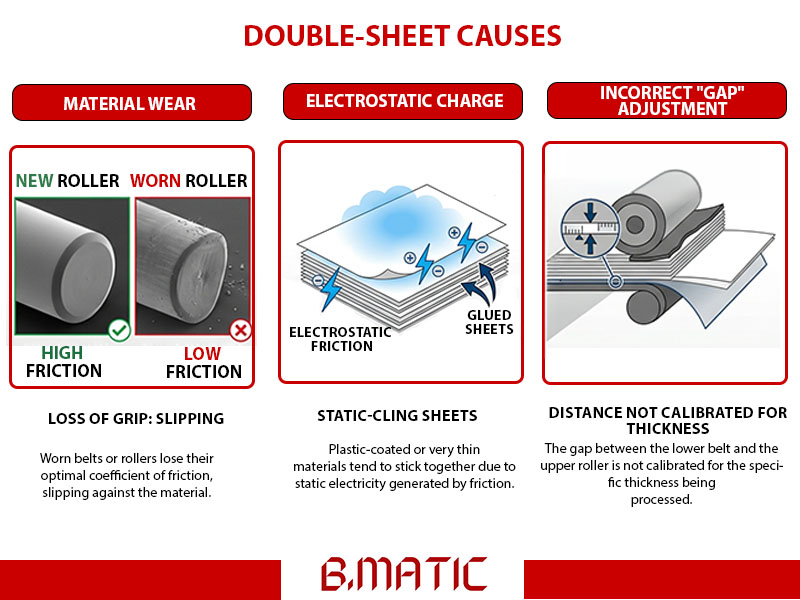
Before looking for a solution, it is crucial to understand the origin of this anomaly. Feeders separate products by exploiting the difference in friction between the lower belts and the upper retard rollers. The error generally occurs due to three factors:
-
Material wear: Worn belts or rollers lose their optimal friction coefficient, slipping on the material.
-
Electrostatic charge: Laminated or very thin materials tend to stick together due to static electricity generated by rubbing.
-
Incorrect adjustment: The “gap” between the lower belt and the upper roller is not calibrated for the specific thickness being processed.
Technical solutions for packaging automation
To ensure smooth feeding and prevent line blockages, it is essential to adopt advanced and integrated technological solutions:
-
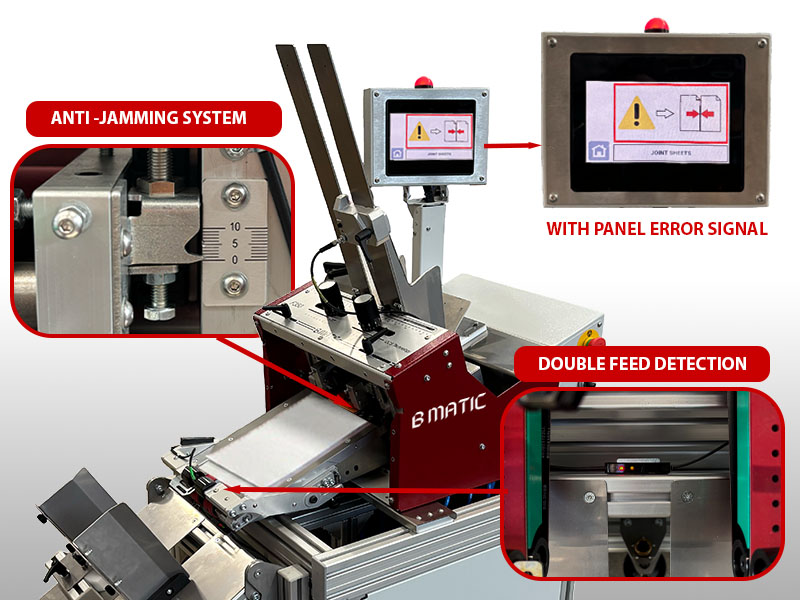
Solution for Jamming problems: Our mechanical anti-jamming system detects product crumpling within the feeder before it causes a mechanical block in the machine. The system is adjustable to vary the tolerance that triggers the jamming error depending on the product; in this way, it stops the process and promptly alerts the operator.
-
Solution for the Double Feed problem: In this case, a dual verification occurs using a fiber optic sensor and an encoder that check the length of the product. This prevents overlapping (products overlapping in length) by warning if two products have passed instead of one. This typically happens when the machine’s thickness setting has been incorrectly adjusted or when wear on the belts and rollers has altered the previous adjustment.
-
Static electricity management: The installation of ionizing bars at the hopper entrance helps neutralize the static charge on laminated or thin materials, allowing the sheets to separate naturally and preventing multiple feeds.
Ensuring Process Stability
Preventing double feed errors, and the consequent jams, requires a consistent maintenance plan for the separation elements. The use of feeding technologies designed to minimize manual adjustments and automatically intercept errors preserves operational continuity, eliminating waste and protecting industrial margins.